

Give Your HVAC a Fresh Start This Spring
Master your spring air filter replacement guide: Swap HVAC, car cabin & engine filters for peak efficiency, allergy relief & IAQ in Northwest WA.
Why a Spring Air Filter Replacement Guide Belongs on Every Homeowner's To-Do List
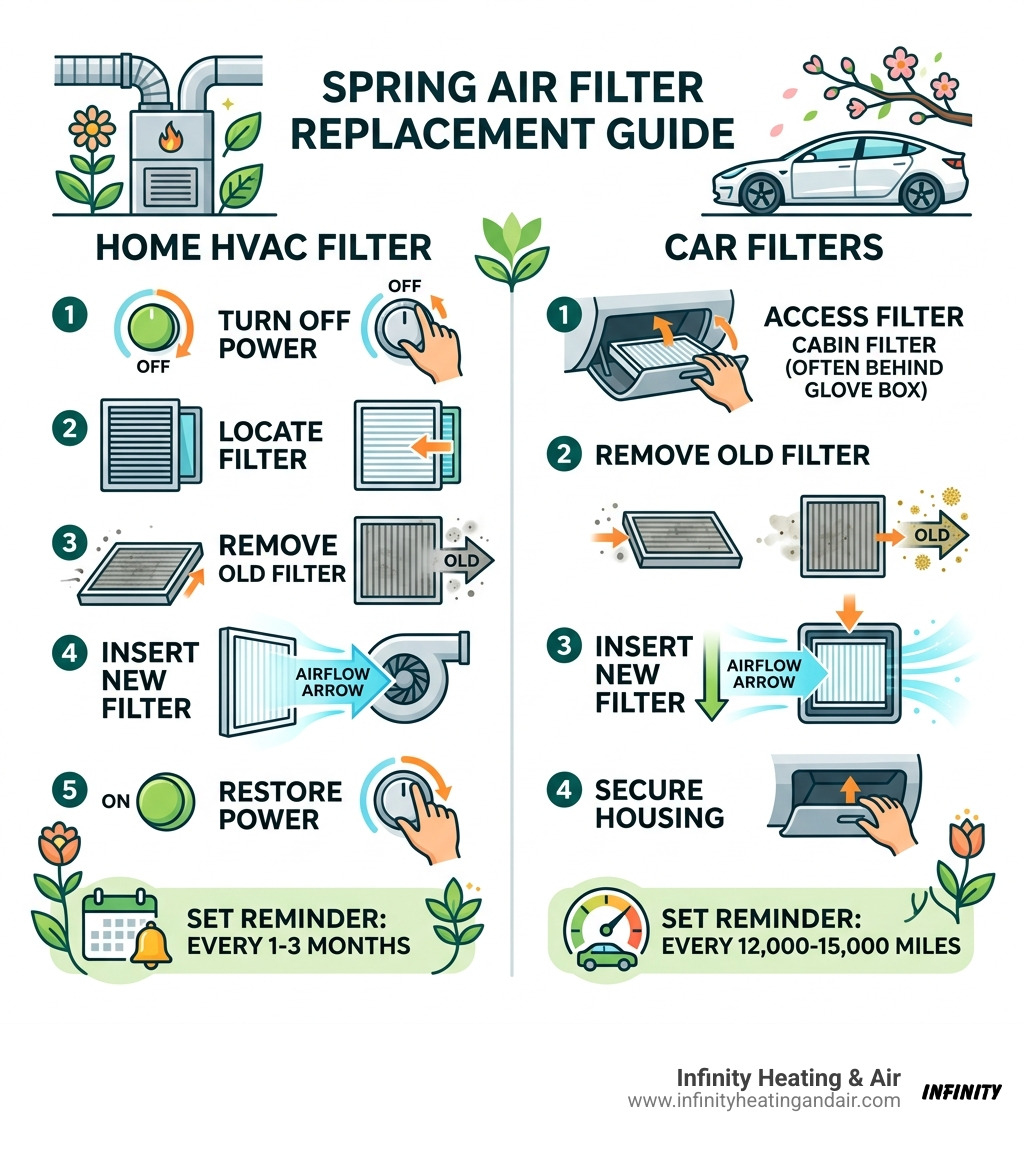
A spring air filter replacement guide covers everything you need to know to swap out dirty filters in your home HVAC system and vehicle before allergy season peaks. Here's a quick overview:
Quick Spring Air Filter Replacement Summary:
- Turn off your system at the thermostat or power switch before touching anything.
- Locate your filter — in your furnace, air handler, return air vent, or behind your car's glove box.
- Remove the old filter and note the airflow direction arrow.
- Insert the new filter with the arrow pointing toward the blower (or downward for cabin filters).
- Close the housing and restore power.
- Set a reminder — every 1 to 3 months for home HVAC filters, and every 12,000 to 15,000 miles for car cabin filters.
Spring in Northwest Washington is beautiful — but it also brings a surge of pollen, dust, and allergens that can clog your air filters fast. After months of winter heating, your filters have already been working overtime. Add spring pollen to the mix, and a dirty filter stops being a minor inconvenience. It becomes a real problem for your indoor air quality, your HVAC system's efficiency, and even how well your car runs.
The good news? Replacing your air filters is one of the easiest home maintenance tasks you can do yourself. It takes less than 15 minutes, requires few or no tools, and makes an immediate difference in the air you breathe indoors.
This guide walks you through everything — home HVAC filters, car cabin filters, and engine air filters — so you can head into spring breathing easier.
Why Spring is the Best Time for a Spring Air Filter Replacement Guide
As we move through April 2026, those of us in areas like Puyallup, Tacoma, and Olympia are seeing the classic Northwest Washington spring transition. While the rain begins to let up, the pollen count begins to skyrocket. This seasonal shift is exactly why a spring air filter replacement guide is so essential right now.
During the winter, your furnace or heat pump has been circulating air constantly to keep you warm. This means your filter is likely already packed with dust, pet dander, and lint. When spring arrives, it brings a fresh wave of microscopic invaders. Tree pollen, grass allergens, and outdoor dust start finding their way into your home and car. If your filter is already full, these particles have nowhere to go but back into your living space or your lungs.
Replacing your filter now is also a critical part of a Spring HVAC Checklist: Preparing for Summer. Soon, you’ll be switching from heating to cooling. A clean filter ensures that your AC coils don't get coated in grime, which can lead to frozen coils or system breakdowns on the first hot day of the year. By taking ten minutes to swap a filter today, you are protecting your indoor air quality (IAQ) and ensuring your system can breathe as easily as you do.
Comparing Home HVAC, Car Cabin, and Engine Air Filters
It is a common misconception that all air filters are created equal. In reality, your home and your vehicle use three distinct types of filters, each with a specific job to do. Understanding these differences is key to mastering your spring air filter replacement guide.
| Filter Type | Primary Location | Function | Key Benefit |
|---|---|---|---|
| Home HVAC Filter | Furnace or Air Handler | Cleans air circulating through the home | Protects HVAC equipment and IAQ |
| Car Cabin Filter | Behind Glove Box/Dashboard | Cleans air entering the vehicle interior | Removes pollen and odors for passengers |
| Car Engine Filter | Under the Hood | Cleans air entering the engine | Boosts fuel economy and performance |
Home HVAC Filters
These are the large, often rectangular filters you find in your furnace or return air vents. Their primary job is to protect the sensitive internal components of your heating and cooling system from dust buildup. However, higher-quality pleated filters also act as a powerful defense for your home's air. If you've been looking into How to Prepare Your Furnace for Winter: Essential Maintenance Tips, you know that filtration is the first line of defense against mechanical failure.
Car Cabin and Engine Filters
The cabin filter is like the HVAC filter for your car; it keeps the air you breathe inside the vehicle clean. The engine air filter, on the other hand, ensures that your engine gets the clean "oxygen" it needs for combustion. A clogged engine filter is like trying to run a marathon while breathing through a straw—it kills your performance and wastes gas.
Step-by-Step Home HVAC Filter Replacement
Replacing your home air filter is the single most effective DIY task you can perform. Whether you live in a cozy home in Enumclaw or a modern apartment in Bellevue, the process is largely the same.
Step 1: Safety First
Before you even touch the filter, turn off your HVAC system. You can do this at the thermostat or by using the service switch (which looks like a light switch) located on or near the furnace. This prevents the fan from kicking on while the filter is out, which could suck debris directly into the motor.
Step 2: Locate the Filter
The filter is usually found in one of three places:
- The Furnace/Air Handler: Look for a narrow slot where the large return duct meets the main unit.
- The Return Air Grille: In some homes, the filter is located behind a large metal grate on a wall or ceiling.
- The Slot Cover: There may be a removable metal flap that hides the filter.
Step 3: Remove and Inspect
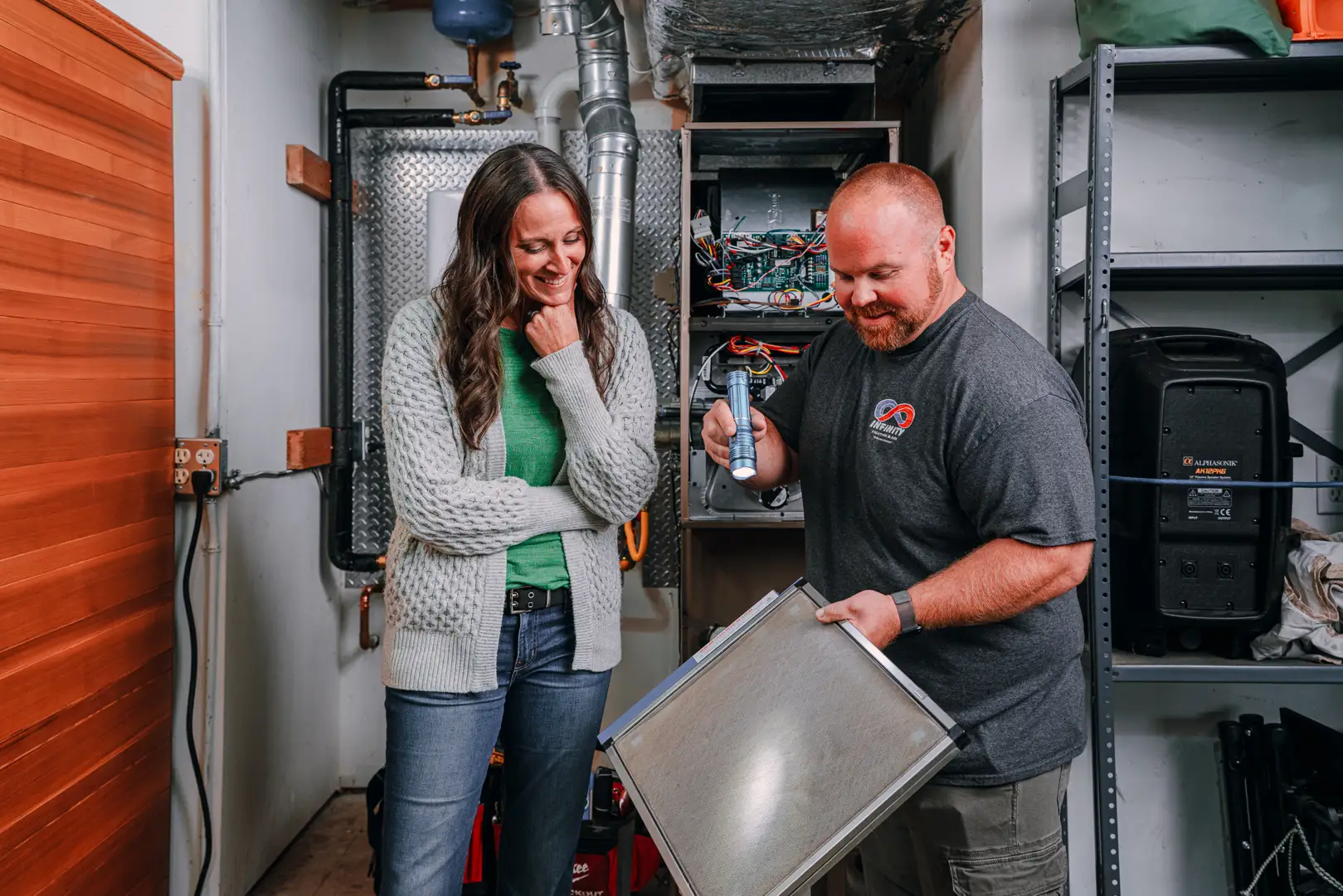
Slide the old filter out. Take a moment to look at it. If it’s gray, fuzzy, or you can’t see light through it, it’s definitely time for a change. For more details on what to look for, check our guide on Furnace Filter Replacement.
Step 4: Note the Airflow Direction
This is the most important step! Look for an arrow printed on the side of the filter frame. This arrow indicates which way the air should flow. Usually, it points toward the furnace or air handler unit.
Step 5: Insert the New Filter
Slide the new filter in, ensuring the arrow is pointing the right way. If it’s a tight fit, don't force it—double-check that you have the correct size. The size (e.g., 16x25x1) is printed on the side of the old filter.
Step 6: Power Up
Replace any covers or doors, turn the power back on, and you're done!
Choosing the Right MERV Rating for Your Spring Air Filter Replacement Guide
When buying filters, you’ll see a MERV (Minimum Efficiency Reporting Value) rating. This tells you how well the filter traps particles.
- MERV 1-4: Basic protection, mostly for the machine itself.
- MERV 8-11: The "sweet spot" for most Northwest Washington homes. It traps dust, pollen, and pet dander without straining the system.
- MERV 13: Excellent for severe allergy sufferers or homes impacted by wildfire smoke.
Be careful not to go too high without professional advice. Filters with very high MERV ratings are thicker and can restrict airflow, leading to the issues discussed in The True Cost of Neglecting HVAC Maintenance.
How to Replace Your Vehicle’s Cabin and Engine Filters
Your car needs a spring refresh just as much as your home does. If you’ve noticed a musty smell when you turn on the AC or if your car feels "sluggish," your filters are likely the culprit.
Replacing the Cabin Air Filter
In most modern vehicles, this filter is located behind the glove box.
- Empty the glove box and release the side tabs to let it swing down.
- Locate the rectangular cover and snap it open.
- Slide out the old filter. Note if it’s full of leaves or dust.
- Insert the new filter (usually with the arrow pointing down toward the floor).
- Snap the cover back on and reattach the glove box.
Replacing the Engine Air Filter
This is located under the hood, usually in a black plastic box.
- Open the hood and locate the air box (it usually has a large hose attached to it).
- Undo the clips or screws. Most cars use simple metal tension clips.
- Lift the lid and swap the filter.
- Ensure the seal is flush before clipping the lid back down.
Replacing a clogged engine filter can boost your acceleration by up to 11% and improve gas mileage by 10%. It’s a vital part of Seasonal HVAC Preparation: Live in Comfort Year-Round, even when you're on the road.
Signs You Need a Spring Air Filter Replacement Guide for Your Car
- The "Locker Room" Smell: A musty odor when the vents are on.
- Weak Airflow: Even on the highest setting, the air feels weak.
- Foggy Windows: A clogged cabin filter can't clear humidity effectively.
- Poor Fuel Economy: If you're visiting the pump more often in Lakewood or Lacey, check the engine filter.
- Unusual Vents Noises: Whistling or humming can mean the filter is sucked out of place or clogged.
For more on maintaining your vehicle's cooling comfort, see our AC Maintenance Checklist.
Maintenance Tips for Window AC Units and Central Systems
While central HVAC systems are common in areas like South Hill and Graham, many residents still rely on window AC units for summer comfort. These require a slightly different approach in your spring air filter replacement guide.
Window AC Units
Most window units have a reusable mesh filter. Instead of buying a new one, you can usually clean it.
- Safety: Unplug the unit first. For deep cleaning, some manuals suggest discharging the capacitor, but for basic filter cleaning, simply ensuring the power is disconnected is key.
- Washing: Slide the filter out and wash it in the sink with warm water and mild soap.
- Disinfecting: To prevent mold, you can spray the filter with a 3% hydrogen peroxide solution.
- Drying: Always let the filter air-dry completely before putting it back in. A wet filter is a magnet for mold.
Central Systems
For central systems, ensure the area around your outdoor condenser unit is clear. Spring growth can quickly surround the unit. Aim for at least 2 to 3 feet of clearance to allow for proper heat exchange.
Frequently Asked Questions about Spring Air Filters
How often should I change my home HVAC filter?
For standard 1-inch pleated filters, we recommend every 1 to 3 months. However, if you have pets or live in a dusty area like a new construction zone in Tehaleh, you should check it monthly. Large 4-inch "media" filters can often last 6 to 12 months, but they should still be inspected every spring and fall.
What tools do I need for car filter replacement?
For the cabin filter, usually none! Most use simple plastic clips. For the engine filter, you might occasionally need a Phillips-head screwdriver, but most modern cars use metal tension clips that you can flip with your hands. Always keep your owner's manual handy just in case.
Can I clean and reuse my air filters?
Unless the filter is specifically labeled as "washable" or "reusable" (like some high-performance engine filters or window AC mesh), the answer is no. Standard paper or pleated filters are designed to be disposable. Attempting to wash a paper filter will ruin the fibers and could lead to mold growth or restricted airflow.
Conclusion
Taking the time to follow this spring air filter replacement guide is one of the best things you can do for your home, your car, and your family's health. It’s a small task that yields big rewards in comfort and efficiency.
At Infinity Heating & Air, we are proud to be your Northwest Washington HVAC and home air quality experts. From Auburn to Yelm and everywhere in between, we are dedicated to crafting "endless comfort" for our neighbors. Whether you need a simple system tune-up or a complete IAQ overhaul, our team is ready to provide reliable, expert service.
Ready to take the guesswork out of your home maintenance? Sign up for a Maintenance Plan today and let us handle the heavy lifting so you can enjoy the spring sunshine!
Written & reviewed by the Infinity Heating & Air team — licensed WA HVAC contractor (INFINHA841B8). Family-owned in Graham, answering 24/7 across the South Sound.
Choose Infinity & enjoy endless comfort.
Your perfect home environment awaits — call (253) 740-5135 or schedule service online and our team will take it from there.
Open 24/7 · 100% Satisfaction Guaranteed · Graham, WA
